
A Wild Landscape Journey Awaits
This comprehensive full-day tour explores the vibrant cultural capital, historical estates, and spectacular coastal landscapes of Northern Mauritius. It offers a perfect blend of history—from the island’s sugar legacy to colonial architecture—and natural beauty, ending on some of the North’s most beautiful beaches. The North Tour provides a deep dive into the island’s bustling life and unique heritage, showcasing 10 distinct stops.
8
Hours Duration
10
Unique Destinations
~100
KM
Sir Seewoosagur Ramgoolam Botanical Garden
The Botanic Garden, formally known as Sir Seewoosagur Botanic Garden, is one of the most visited attractions in Mauritius.It is populated with more than 650 varieties of plants among which are the famous Baobabs, the Palmier Bouteille, the ineluctable Giant Water Lilies, dozens of medicinal plants, a large spice garden and many more.One of the main attractions of the botanical garden is the 85 different varieties of palm trees brought from different corners of the world So if you like exploring The Botanical Garden is for you
L’aventure Du Sucre
An old sugar factory, full of memories and emotions serves as a setting for this jewel symbolized by sugar. It offers to rediscover the history of sugar in Mauritius through a complete visit from the exploitation of sugar cane to processing. Sugar cane is the first agricultural production in the world. An interactive journey that makes us discover the history of sugar cane in Mauritius, the manufacturing and processing processes, the different technologies used for production and the old sugar routes. L’Aventure du Sucre in Mauritius allows you to end your visit with a tasting of the 12 unrefined sugars made locally. Their scent and taste are unique and definitely tasty!
Caudan Waterfront
Above all, the Caudan Waterfront is a cultural destination that offers its visitors an unforgettable experience. Whether you are a history buff, an art and theater enthusiast, a foodie, fan of artisanship or shopping, you will love the authentic and vibrant experience of the Caudan Waterfront! Waterfront mall featuring local boutiques, handycraft markets, a food court, a cinema & local arts & crafts vendors.
China Town (Port-Louis)
The Chinatown in Mauritius is not like the Chinatowns in other countries, it is full of Chinese culture. China Town is filled with shops, many being over a hundred years old. Some chinese families have been running their businesses for generations and would rarely opt to upgrade to newer building structures. China Town has a very particular smell, incense, far eastern perfumes and food all mixed together, which will take you to another world. Many Chinese live in Luyi Port in Mauritius, so Chinatown here is also the largest Chinatown in Mauritius. There are many buildings with traditional Chinese characteristics built here, and the lively streets are lined with large and small Chinese shops or restaurants. Whether day or night, it is very lively and worthy of everyone to come and experience.
Le Château De Labourdonnais
The Château de Labourdonnais, real jewel of the Mauritian heritage, is an emblematic destination in the North of Mauritius- place where history, flora, orchards, gastronomy, local “savoir-faire” and “savoir-vivre” coexist. The iconic Château de Labourdonnais offers you the chance to immerse yourself into the 19th century art of living, along with a visit to the estate and complimentary juice and rum tasting.You will witness the French charm of the place and also get to learn about the rhumerie and other products manufactured on the estate. As you roam the estate gardens, you may even have the chance to spot the Aldabra Tortoises enjoying their royal life.
Mont-choisy Beach
The longest beach in the north of Mauritius, Mont Choisy extends to Trou aux Biches and Pointe aux Canonniers, a beach of endless beauty. The beach is easily recognizable by its coast that formed an arc. A beach lined by thousands of large casuarinas trees, a white sand beach and a turquoise water like most of the beaches that can be found in the north of the island.Beautiful sandy beach with fishes in the sea and safe swimming. Lovely to watch and interact with locals, buy local food from outlets and just chill. Amazing views and warm water.You will also find nearby restaurants and wide range of water attractions on the beach.
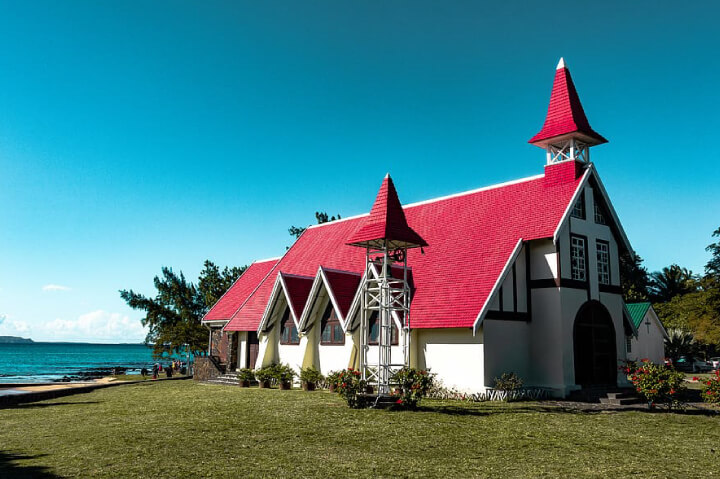
Red Roof Church
One of the most renowned churches in Mauritius is the Notre Dame Auxiliatrice Chapel, a Roman Catholic Church famous for its vivid red roof against the bright turquoise sea and azure sky.The Notre Dame Auxiliatrice Church is famous for its lovely red roof, which attracts many curious passers-by and offers a picturesque background for worthy snapshots.The Red Roof Church is well worth a visit even if it’s just for the views or snorkelling near the bay. It’s a very popular photo destination for honeymooners.
La Nicolière Reservoir
Situated at the northern part of Mauritius, La Nicolière is a small lake which is mainly used to supply water for domestic purposes. Surrounded by nature preserved hillsides, La Nicolière has numerous viewpoints and has become a nature spot where mostly locals like to have a nice afternoon walk to breathe in some fresh air and enjoy the peacefulness of the environment. When you finally reach at its highest viewpoint, you can admire the lake with its clear water shimmering in the sun and a magnificent mountain range in the background. Drop dead gorgeous!
Central Market
Port Louis, being the capital of Mauritius, is one of the if not the busiest town of Mauritius. The streets of Port Louis are filled with shops selling a wide variety of products. Here at the bustling Central Market you will find shops that fit all your needs, ready-made garments, spices, jewellery, watches, shoes, crafts amongst others. The main section of the market is definitely for the fresh fruits and vegetables. Here, you will have a real feast for the eyes with the setting for the colourful fruits and vegetables.
Jummah Masjid
The Jummah Mosque formerly “Mosque of the Arabs”, is a mosque in Port Louis,from the 1850s. The building combines Indian, Creole and Islamic architecture. The Jummah Mosque houses the remains of Jamal Shah in a marble tomb next to the mosque. From the towering bulbous domes, glistening white, hung the brilliant glass chandeliers that provided lighting for over fifty years – that is, till the advent of electricity. The beautiful chandeliers can still be seen hanging in the prayer hall though the interior is now lit with fluorescent bulbs.